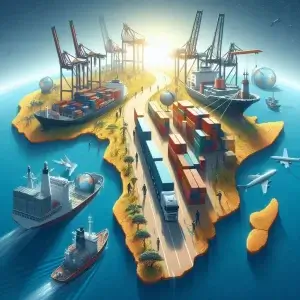
Africa’s import and export sector is important to the continent’s financial development and is growing rapidly as a colorful international exchange hub. With fifty-four world-class countries with huge herbal properties, rising industries and growing global partnerships, Africa’s import-export zone offers magnificent opportunities for entrepreneurs, financiers and governments. However, to truly understand this capability one must be aware of the vital industries, barriers, and strategic arrangements that influence this colorful buying and selling environment.
Africa’s business landscape: a growing market
Over the past ten years, the proximity of Africa’s imports and exports has increased periodically. Oil, minerals, agricultural objects and precious metals are some of the main assets that the continent frequently exports. While Kenya, Ethiopia and Ivory Coast are major exporters of agricultural products, including coffee, tea, cocoa and plants, countries such as Nigeria, Angola and South Africa are major exporters of gold and crude oil.
However, synthetic items, devices, electronics, medicines and processed foods are often imported into Africa. Most of these imports come from different countries, including the United States, China, India, and the European Union. Equipment, devices and finished objects are increasingly in demand as Africa’s industrialization progresses.
Opportunities in Import-Export Businesses
Agriculture and food products: Africa produces a wide variety of agricultural products due to its large amount of fertile land and ideal climate. There are profitable opportunities to export raw or semi-processed agricultural products, including cashews from Tanzania, espresso from Ethiopia or cocoa from Ghana.

Minerals and natural resources: Natural assets are abundant throughout Africa. The export of copper and cobalt, which is likely essential for batteries and electronics, makes places around the world such as Zambia and the Democratic Republic of the Congo attractive to international technology markets.
Fabrics and crafts: Handmade crafts and unique, culturally rich fabrics are becoming more and more famous in markets around the world. Export demand for East African earrings and decoration or West African fashion items is increasing.
Imports of consumer goods and technology: In African cities, there may be excessive demand for consumer electronics, used cars, mobile phones, production structures and scientific materials. Effective logistics and delivery chains can also help importing companies that meet this need thrive.
Challenges to overcome
The African import and export agency has a number of limits regardless of its functionality. Problems with infrastructure, including horrible roads, few rail systems and antiquated ports, can delay resources and expansion costs. Cross-border trade is also complicated by inconsistent criminal and customs laws in certain countries.
Foreign exchange operations are also hampered by political unrest in some regions, restrictions on virtual technology, corruption and lack of access to finance. However, with projects such as the African Continental Free Trade Area (AfCFTA), which aims to rationalize and expand intra-African trade, several States are working on adjustments and improvements.
Embracing innovation and technology
In Africa, technology is changing the way exchange is done. The supply chain manipulates software, virtual rate systems, and electronic systems.

Africa’s borders are not boundaries for shoppers and businesses hoping to go away their imprint; as an possibility, they might be doors to enlargement.