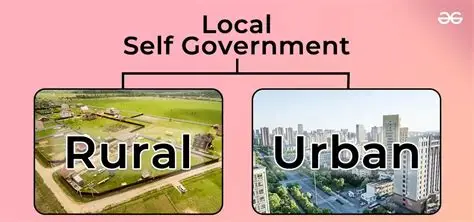
local self-government (LSG) will be under increasing pressure to manage complex financial bureaucracies and provide effective services. A complex web of regulations often hinders development and encourages communities through grants for municipal budgets. LSG strengthens fiscal bureaucracy, provides resources to reach schools and roads to improve accountability, transparency and public confidence. Gaining an understanding of these issues and possible solutions can enable local leaders to implement significant reforms.
Financial bureaucratic burden
Budgets for basic services, such as road maintenance or public library maintenance, are managed by local self-governments, such as county administrations or municipal councils. However, long-winded processes, cumbersome approvals and compliance requirements often disrupt financial processes. According to the 2024 survey, 60% of LSGSs divert resources by spending more than 30% of their administrative time on financial documents.
Mythical rules are another source of bureaucracy. All national, state and municipal regulations must be complied with by LSGs with their respective reporting requirements. Although the financial guidelines of the European Union are complex in Europe, municipal corporations in the United States must follow the guidelines set forth by the Government Accounting Standards Board (GASB).
Key challenges
System Fragmentation: Many LSGs use legacy software for accounting and budgeting, resulting in errors and inefficiencies. A survey conducted in 2025 found that only 40% of municipalities have employed integrated financial management systems.

Compliance Surcharge: Call audit requirements require significant resources for call grants or taxes. For example, a small municipality would need several staff members to handle a single application for the European Union Coordination Fund.
Transparency gap: Public trust is lost when the budget or expenditure is not clear. Due to unclear processes, 25% of citizens in OECD countries expressed doubts about local government spending in 2024.
Lack of staffing: Teams, including 15% of LSG financial responsibilities, were understaffed and understaffed, making it difficult to meet regulatory requirements.
Solution for streamlines
Modernization of financial bureaucracy requires a bold phase. The first is the importance of digital advances. SAP or OpenGov cloud-based systems for public sector solutions can automate grant monitoring, reporting and budgeting, reducing processing time by 50%.
Second, complexity is reduced through standardized processes. As with Canada’s well-communicated financing model, which has reduced administrative costs by 20%, LSG can use the same format for grant applications or audits. Personnel on these systems ensure ongoing deployment.
Third, trust is strengthened through open data efforts. With 70% of locals saying they have a high level of trust in local government, Seoul’s municipal government enables individuals to monitor spending in real time.
move on
To properly serve communities, LSGs must prioritize efficiency. To find bottlenecks, start by reviewing current financial processes. Even with a limited budget, invest in technology and training because digital tools save money over time. To build trust, establish rapport with people through open reporting.
LSG will be able to successfully interact in 2025. Effective financial management ensures that resources are distributed where they need the most, to empower communities. Work now to streamline for a rich future.
Thanks