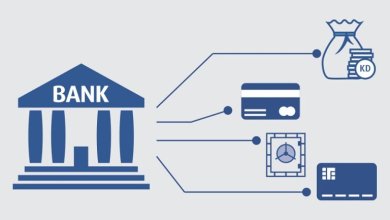
Companies no longer operate in a vacuum within the financial machinery associated with recent times. They are part of a broader financial apparatus: a system of businesses, markets, devices and guidelines that make it less complicated to move cash and goods. This tool has a huge impact on the organizational environment and affects everything from daily operations to financing options.
1. Role of the financial system in business
The financial system procedures are the backbone of the employing organization’s operations at its core. It transfers money from consumers and savers to those who need additional money (governments and businesses). Without this framework, companies could have difficulty acquiring structures, suffer financial booms, or even cover hedging costs.
2. Access to capital
Providing access to finance is one of the most direct ways financial machines help businesses. Loans, credit rating pressures and reasonable loan options are offered through the use of financing companies, industrial banks and credit rating unions. Crowdfunding and venture capital have become essential fundraising resources for corporations.
3. Risk management and stability
The economic mechanism to offer rate diversity is not the simplest; It’s also about managing risks. Derivatives markets, insurance companies and hedging tools allow companies to protect themselves against an avalanche of surprise games that include changes in hobby charges, cash fluctuations in distant places and natural failures.

4. Promote trade and agreements
Fast, secure and reliable transaction structures are crucial in today’s trading company placements. Financial institutions provide price processing services, foreign exchange and credit score rating centers with useful resources on how to present every national and international exchange. Without such a framework, boundary change can be ineffective, costly and slow.
5. Encourage investment and growth
Mutual funds, stock market and bond market provide companies with long-term capital formation risk. Publicly traded companies can issue shares to finance large-scale projects and borrow from customers through debt instruments such as commercial bonds.
6. Regulatory support and consumer confidence
Financial systems hide behind a series of criminal rules and policies that maintain balance, equity and openness. Regulatory corporations, made up of securities commissioners and major banks, monitor instrument suitability, prevent fraud and protect consumers.
7. Economic indicators for decision making
In addition, the financial system produces valuable information that companies use to influence their decision making, including changes in interest rates, inflation, and the average performance of the stock market. These signs and symptoms help managers in pricing strategies, demand forecasting and investment planning based solely on market conditions.
In quitting smoking
A financial instrument is a living and great detail of a business organization’s environment; It is not always a general or abstract concept. It allows the expansion and balancing of groups across the region with the help of providing prices.

Essentially, a sturdy monetary machine fosters an environment in which agencies may additionally additionally flourish, compete, and growth, in the end advancing the economic device.